A First Exhibition Visit Built Around One Question
Plan a first exhibition visit around one question: it gives you a simple way to look closely, pause without pressure and return to a work that lingers.
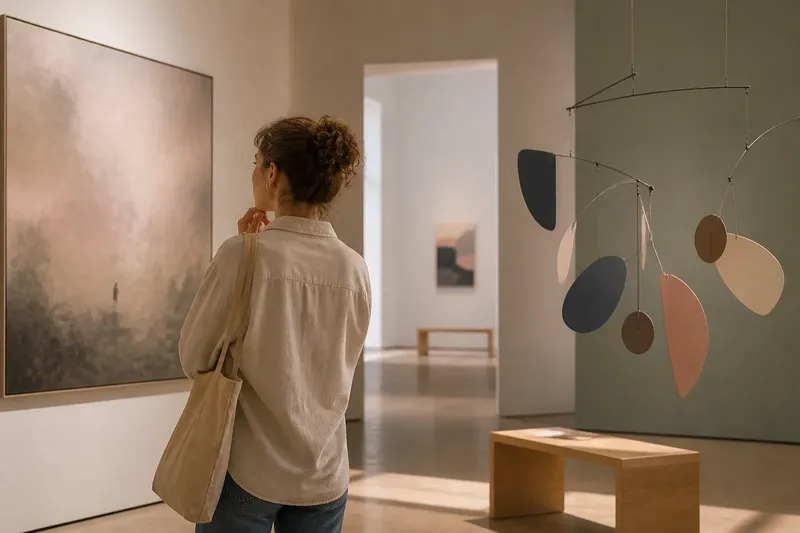
What should you do when you walk into an exhibition and do not know where to begin? For a first exhibition visit, carry one question from room to room, then let the works suggest how to answer it. You do not need to understand everything or see every object. The question is a loose thread, not a test.
Choose a useful question
Before you go in, think of a question that invites looking rather than specialist knowledge. “What makes this feel quiet?” might suit a show of paintings; “What changes when materials are combined?” could open up a display of sculpture, textiles or design. A broad question gives you room to notice different things, while a very narrow one can make unrelated works feel like obstacles.
If the exhibition has a title or a short description on its website, use it to shape your question, not to guess the curator’s intended answer. You might ask what counts as a portrait, where a sense of movement comes from, or how an object changes when it is displayed rather than used. Choose something you genuinely wonder about. There is no need to write it down unless that helps you remember.
Set a comfortable pace
At the entrance, check the gallery map and any visitor information. Notice the layout, places to sit and whether there are quieter rooms. If the exhibition is spread across several spaces, choose a starting point that feels inviting rather than racing to the far end. Your route can change as you go.
Give yourself permission to move slowly, skip a room or step out for a breather. Exhibition labels are there if you want context, but you can look before reading them. Think of your question as a pocket-sized torch: it helps you notice details, but it does not have to light up the whole building.
Look before you read
Choose one work that catches your eye, even if you cannot explain why. Stand where you can see it comfortably, then take in its overall shape, colour, scale and arrangement. Ask how it makes you feel to look at it, or what your eye keeps returning to. Your first response can be uncertain; “I’m not sure” is a perfectly good place to start.
Now bring back your question. If you are wondering what makes a painting feel quiet, for instance, you might notice muted colours, open space or a figure turned away. These are observations, not a final interpretation. A label may add information about the artist, material or subject, and that context can change what you notice next.
Follow the small surprises
When something draws you in, stay for another moment instead of moving on by habit. Look at a detail, then step back and see how it relates to the whole. If the work is abstract or unfamiliar, describe what is actually visible: a repeated shape, a rough edge, a shadow on the wall. Concrete observations give your question something to work with.
Say you arrive at a gallery wondering how artists suggest movement. A hanging sculpture catches your attention, though you had expected to focus on paintings. You notice that its pieces turn slightly as people pass, then read the label to learn what materials are used. The expected result is not a correct answer, but a more specific question: is the movement in the object, in the viewer, or in both?
Use labels selectively
Read a label when you want another layer, not because every work requires one. A short caption may name a material or give a date; a longer text may describe the artist’s approach. Read the part that answers a question you have, then look back at the work. The useful moment is often the comparison between what you noticed first and what you see now.
If a label feels dense, leave it. You can also read a room introduction once to get a broad sense of the exhibition, then return to individual works with your own attention. There is no obligation to turn a visit into a lesson or remember every name.
When should you change your plan?
What if a work leaves me puzzled?
Stay with what you can describe before deciding what it means. Notice its material, placement or the way it affects your attention, then move on if the puzzle stops being interesting.
What if my question no longer fits?
Let it go or adjust it; the point is to make looking more attentive, not to force every work into the same answer. A new question can grow from a detail you did not expect to notice.
Should I read every label?
No. Choose labels that add useful context or answer something you are curious about, and give yourself time to look again afterwards.
Return to one work
Before leaving, pause and ask which work has stayed with you. It need not be your favourite. Perhaps it surprised you, made you uneasy or seemed more interesting after you read its label. Find it again if the route allows, and give it a second look without trying to produce a polished opinion.
On this return, notice whether your question has shifted. A work that first seemed still might now feel tense; a material you barely registered may become central. If the gallery is busy, wait for a clear view or revisit when there is space. Your attention matters more than completing a circuit.
Leave with a small note
Once you are outside, take a moment to name one thing you noticed and one thing you would like to look up or see again. You could jot them in your phone, sketch a shape or simply tell a companion. Keep it brief; the aim is to carry a trace of the visit into the rest of your day, not to write a review.
A first exhibition visit built around one question works because it gives you a starting point without deciding what you must enjoy. If you remember only the question and the work you returned to, that is enough to make the next gallery feel less like a room full of answers you are supposed to know.