The Finished-Work Myth: Why a Creative Session Can Count Without a Result
A creative session without a finished result can still feel worthwhile. Learn how attention, experimentation and your own aims can guide what counts.
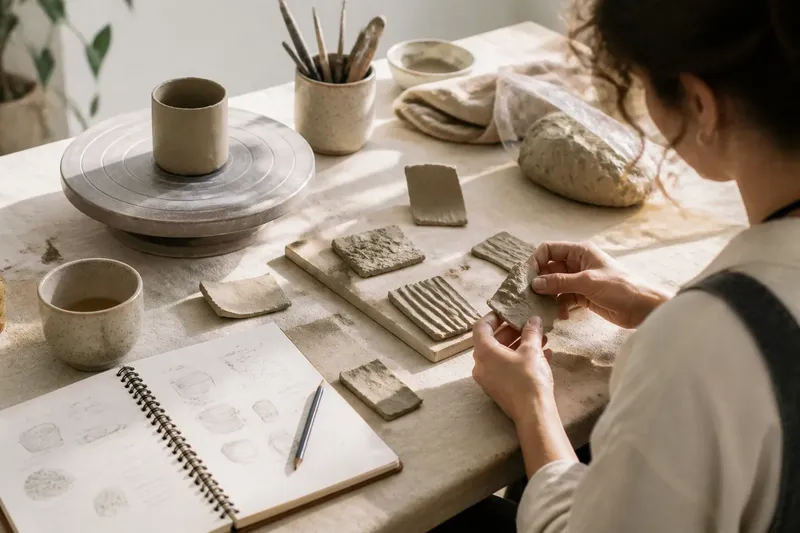
Did you enjoy the session, even though you left without a finished piece? A creative session without a finished result can still be worthwhile; the more useful question is what kind of experience you wanted from it. A ceramics class might leave you with a lopsided test tile, while a life-drawing session ends with a page of quick marks. Neither needs to become a polished object to show that something happened.
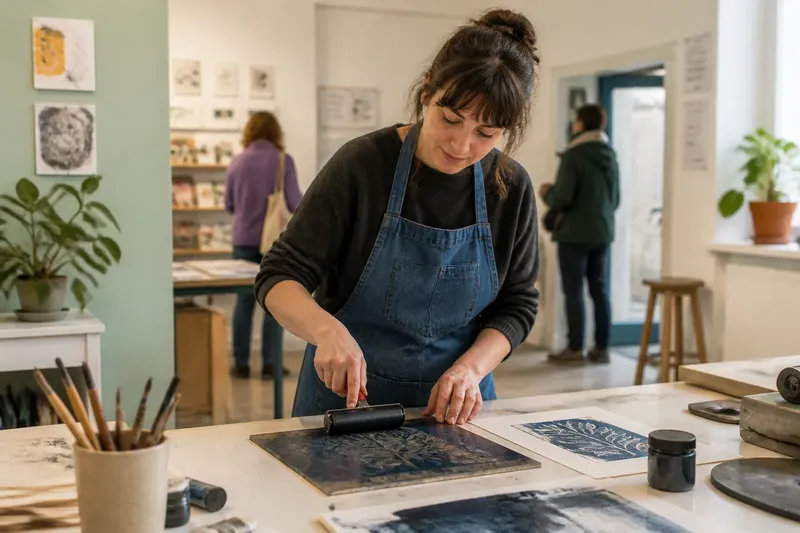
The finished-work myth treats an activity as valuable only if it produces something complete, attractive or ready to take home. That standard can turn a relaxed community printmaking workshop into an exam you never agreed to sit. Instead, try judging a session by the attention you gave it and the experiments you made. Those are practical measures, not consolation prizes for unfinished work.
Choose your measure
There are several fair ways to judge a creative session. A result matters to some people, especially when they are learning a technique or making something for a particular purpose. For others, the value lies in focused time, trying an unfamiliar process or sharing an activity with other people. You do not have to pick one measure for every occasion.
Think of the session like a kitchen drawer: useful things do not all serve the same job. A finished bowl, a better feel for clay and an hour spent absorbed in shaping it are different outcomes. The trouble starts when you use the bowl as the only evidence that the time counted.
- Finished object: Choose this measure when you have a specific piece in mind, such as a card to give someone or a small print for a frame. It suits activities with a clear brief, a limited process and enough time to complete the work without rushing.
- Attention: Choose this when your aim is to settle into a process, notice colour or line, or spend time without multitasking. It suits open studio sessions, sketching groups and repeat visits to a familiar practice.
- Experimentation: Choose this when you want to try a material, make a deliberate variation or discover what you would like to learn next. It suits exploratory workshops and activities where the first attempt may be more useful as a question than as a keepsake.
These measures can overlap. You might finish a simple lino print while also paying close attention to the pressure of the roller. You might leave a collage incomplete but know that torn paper suits your ideas better than cut shapes. A result can matter without being the whole point.
Three ways to take part
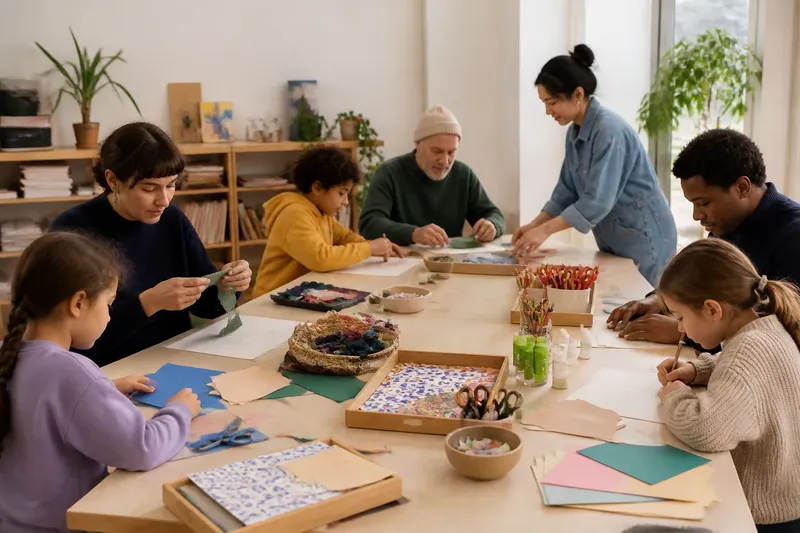
People often arrive at a creative activity with different expectations, even when they are using the same tools at the same table. It helps to notice which approach sounds most like what you need today. None is a permanent identity, and none is better than the others.
The outcome-led session
Here, you set a clear finish line: a small watercolour, a knitted square or a handmade card. You may enjoy seeing the parts come together, following a tutor’s demonstration and taking home a piece you can use. This approach suits someone with a gift, display or personal project in mind, and it can offer a satisfying sense of completion.
The limit is that a tight result can make unexpected discoveries feel like distractions. If your paper tears or your glaze behaves differently from the sample, you may be tempted to hide the change rather than learn from it. It can help to keep the goal modest and allow the work to be a first version, not a verdict on your ability.
The attention-led session
Here, the aim is to stay with the activity rather than reach a particular object. You might notice how charcoal smudges under your palm, how a melody changes when you sing it more softly, or how a repeated stitch settles into a rhythm. This approach suits people who want a focused break, a sensory activity or time to return to a familiar craft.
Attention is not the same as effortless calm. A session can include awkward moments, distraction or a need to ask for help. The useful question is whether you had chances to return to the task and notice what you were doing, rather than whether you felt serene throughout.
The experiment-led session
Here, you arrive with a question instead of a finished design: What happens if I print with less ink? Can I make a composition from only curved shapes? What changes when I use a thicker yarn? This suits a curious beginner or an experienced maker who wants to loosen a familiar habit. The outcome may be a set of rough trials, a new preference or a better question for next time.
Experimentation needs a little permission to look untidy. If every trial has to be presentable, it becomes harder to make meaningful variations. Use scrap paper, spare yarn or a test piece where appropriate, and keep a note of what you changed so you can remember the discovery later.
Say you join a community ceramics session hoping to make a small cup, but the clay keeps slumping. You set the cup aside, press the remaining clay into test shapes and compare how they feel under your thumb. You leave without the cup, but with a clearer sense of the clay’s resistance and an idea to ask the tutor about. That is an invented situation, but it shows how the measure can shift without pretending the unfinished piece is finished.
Match the session to you
The setting and format can influence which approach feels comfortable. A guided class may give you a defined outcome and demonstrations to follow. An open studio may leave more room to make your own trials, while a recurring group can let you return to an idea over time. Ask what participants are expected to make, whether materials are supplied and how much individual guidance is available.
Then consider your reason for going. If you want a gift, an outcome-led session may fit, provided the project and time suit your aim. If you are looking for a concentrated hour away from routine, attention may be a kinder measure. If you are unsure what medium you enjoy, an experiment-led activity can help you explore without committing to a single finished design.
You can also choose by the kind of pressure you are willing to carry. A brief with a clear model can feel reassuring or restrictive. An open prompt can feel freeing or too vague. If you are new to the activity, ask whether there is room to adapt the task; if you already have experience, ask whether the session leaves space for independent work. The right fit is the one that supports the purpose you have for this visit.
Keep the aim visible
A small intention can keep you from drifting into the finished-work myth. Before you start, complete a sentence such as, “Today I want to try…” or “I’ll be pleased if I notice…”. Make it specific enough to guide your attention, but loose enough to allow an unexpected result. “Try mixing two greens” is more useful than “be creative”, and less burdensome than “paint a perfect tree”.
During the session, pause once to check whether your aim still fits. You may have discovered that you want to repeat one mark, ask the tutor about a tool or move on to a different colour. Changing direction is not a failure to follow through; it can be the result of paying attention. In a group class, make that choice respectfully and check with the tutor if it affects shared equipment or the planned activity.
At the end, record a detail rather than grading the whole session. Write down the tool you liked, a choice you would change or a question you want to carry into another visit. A quick note in a sketchbook can be more informative than a photo of a half-finished piece, especially when the photo invites comparison instead of memory.
Questions about results?
Does an unfinished piece mean I failed?
No. A piece may remain unfinished because the session ended, the material needed more time or your attention moved towards exploring. If finishing still matters to you, decide whether to continue it later or treat it as a study rather than using incompletion as a judgement about your ability.
What if I enjoy taking work home?
There is nothing wrong with wanting a tangible result. Choose a project with a clear scope, check what the session covers and leave room for an imperfect first attempt. You can value the object and the experience of making it at the same time.
How can I tell whether I was experimenting?
Look for a deliberate change you made and something you noticed in response. You might have altered the pressure, material, sequence or colour, then spotted a difference worth remembering. The trial does not need to produce a polished piece to give you useful information.
Use a personal standard
There is no need to replace one rigid rule with another. Some days you will want to finish a small object; on others, you may prefer to pay attention or follow a question. A creative session without a finished result can still be worthwhile when its measure matches your reason for being there. Choose that measure before you begin, and let the work tell you what deserves another visit.
When you book or arrive, say plainly what you hope to get from the activity. A tutor may be able to suggest a manageable project, a quiet way to observe the process or a material to explore. And if your aim changes once your hands are busy, let that new intention count too: it is part of the practice, not a debt the unfinished work has left behind.